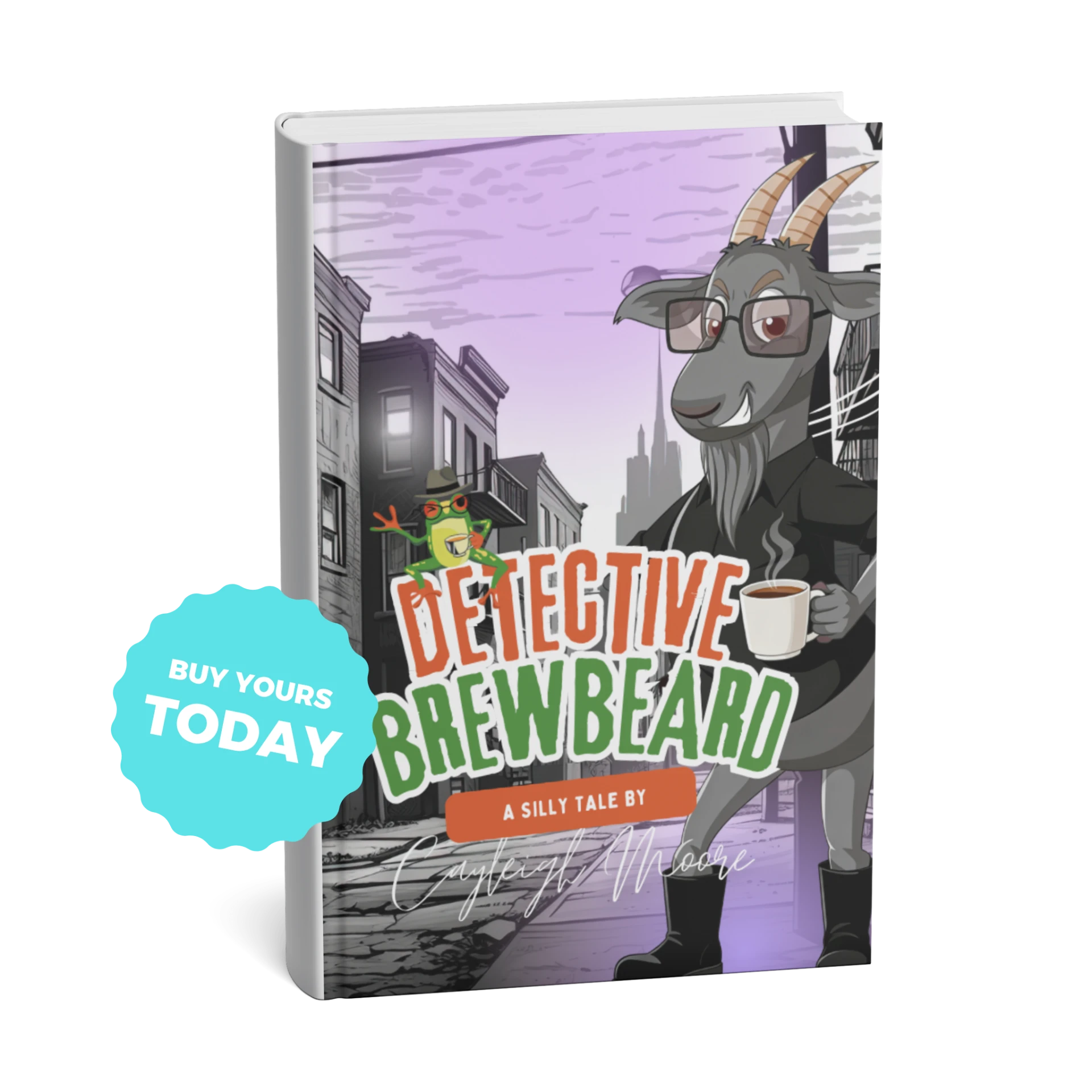
A story does not have to end when the book closes. For a child who has just met a favourite character, that final page can be the beginning of a new game, a drawing or an enthusiastic retelling. Detective Brewbeard, a silly tale by Cayleigh Moore, brings that idea into focus: its book page gathers the story and its companions in one place, ready for families to explore at their own pace.
This is a look at the finished book’s creative world and the extras available alongside it, rather than a first-person account of Cayleigh’s production process. The appeal is simple: a curious goat detective, a distinctive sense of humour and plenty of opportunities to keep asking questions.
Start with the character, not the accessories
A memorable character gives children something to recognise and return to. Brewbeard’s detective style and coffee-carrying cover make a playful first impression. Before reaching for any extras, spend time with the book itself. Ask what your child notices about the detective, what they think might happen and which small detail caught their attention. There is no need to turn these questions into a test.
For writers, this is a useful principle: a companion should grow from the story’s personality, rather than distract from it. A mystery naturally invites clues, observations and questions. A gentle bedtime story might suggest something entirely different.
Give the story a sound
Detective Brewbeard has an original theme tune available to play from its book page, with a separate lyrics download. Families can listen after reading, join in with a favourite phrase or compare the mood of the music with the illustrations. Keep the volume comfortable and let the child choose whether they want to listen. The song is another way into the character’s world, not a replacement for sharing the book.
Turn curiosity into an activity
The Great Brewbeard Detective Pack offers a printable next step. Use it as an invitation, not homework: set out some pencils, offer one activity and see where the child takes it. You could also make a tiny observation game at home. Put three everyday objects on a tray, look together, then hide one. What changed? Keep your own game separate from the official pack so children know which adventure they are inventing.
The Detective Doodle Certificate can mark the end of a playful session. Celebrate curiosity, noticing a detail or trying something new rather than getting every answer right. A certificate is a keepsake, not an assessment of a child’s reading ability.
Make room for familiar comforts
The book page also includes a Detective Brewbeard bookmark and a plush character spotlight. A bookmark can help a child take ownership of their book; a familiar soft companion can join a retelling or sit nearby at storytime. Neither is essential. Families should be able to enjoy the story without buying extra items, and should check any retailer’s availability, age guidance and product details before purchasing.
Try a simple Brewbeard storytime
- Read together first, leaving space for comments and laughter.
- Ask your child to point out one interesting detail.
- Choose just one extra: a song, a printable or a home-made clue game.
- Finish with a retelling: what would Brewbeard investigate next?
The thread connecting these experiences is the character. Reading, listening, drawing and playing can each offer a different way to revisit a story, without asking every family to use every extra. The best continuation is often the one a child invents themselves.
Explore Detective Brewbeard, listen to the theme tune and find the free downloads.